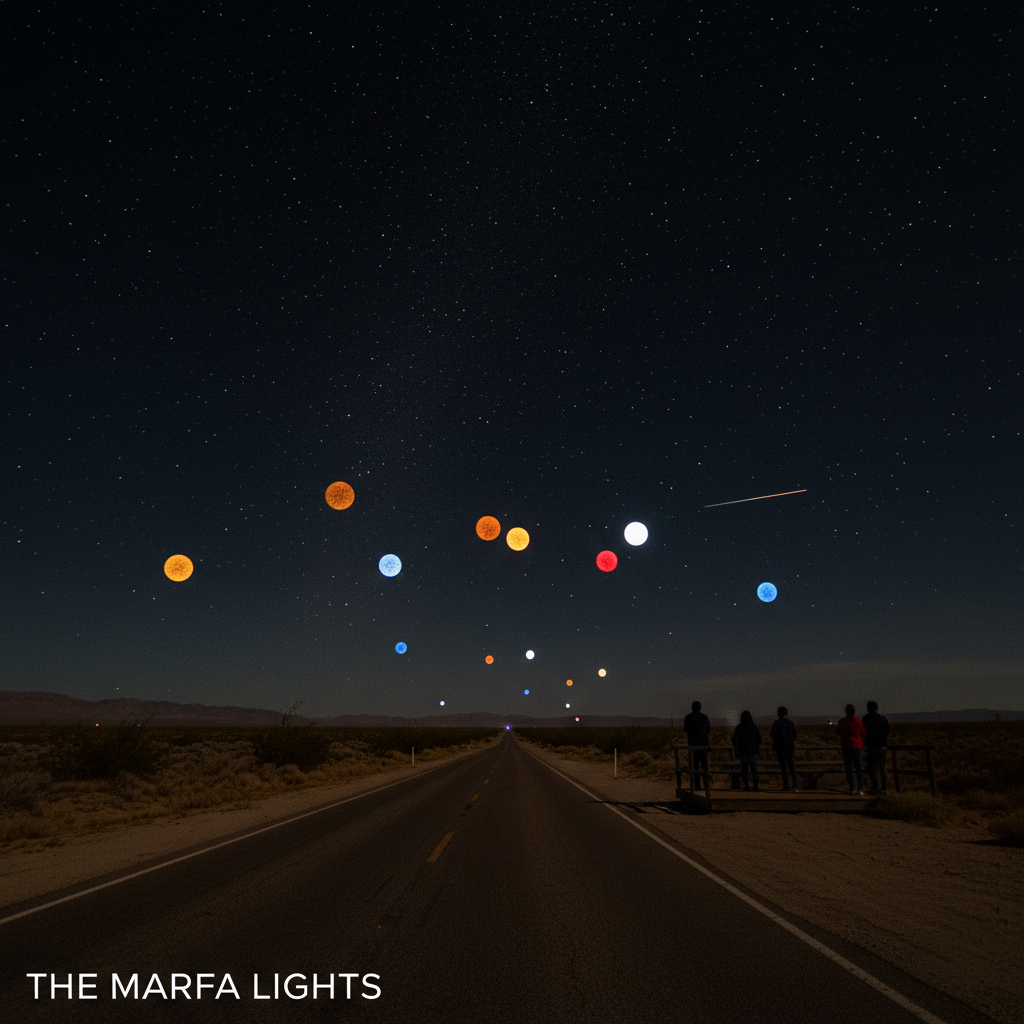
There is a stretch of highway in West Texas where the night does something it simply should not do. Nine miles east of a small town called Marfa, past the last gas station and the last reliable cell signal, the land opens into something enormous and dark and deeply quiet. And then, if you are patient enough, the lights appear.
They are not car headlights. They are not campfires. They float too high and move too freely and vanish too completely for any easy explanation to hold. Locals call them the Marfa Lights, and they have been drifting across this desert for as long as anyone around here can remember.
First Sighting: 1883
The first written record comes from 1883, when a young cowhand named Robert Reed Ellison spotted a glow on the horizon and assumed he was looking at an Apache campfire. He rode toward it. The closer he got, the further the light seemed to be. When other settlers investigated the area the following morning, they found no ashes, no footprints, no evidence that anyone or anything had been there at all.
Since then, the lights have been witnessed by ranchers and university professors, by military pilots and curious tourists, by skeptics who arrived ready to debunk and left with nothing useful to say. They have been studied by physicists and analyzed by aerospace engineers who spent more than a decade recording their behavior.
What Do They Look Like?
The lights appear to glow at roughly basketball size. They are sometimes white, sometimes blue, sometimes amber or red, and occasionally all of these things at once. They split into two and then merge back together. They dart sideways at a speed that feels instinctively wrong. They rise slowly, and then they are simply gone, leaving only the dark and the sound of wind moving across the Chihuahuan Desert.
The Theories
The most widely accepted scientific explanation involves the atmosphere itself. Marfa sits at nearly five thousand feet above sea level, and the temperature here can swing more than forty degrees between day and night. Under specific conditions, light from distant car headlights can bend through layers of warm and cold air and appear to float above the desert floor like something alive. It is a real phenomenon. It has been documented. And it explains some of what people see on some of the nights they see it.
But it does not explain the sightings from 1883, which happened decades before the highway existed. Local folklore says the lights are the spirits of Spanish conquistadors still searching for gold. Others believe they are a form of plasma related to magnetic disturbances deep in the earth. Some simply believe they are something nobody has found a name for yet.
How to See Them
The town of Marfa takes the lights seriously. There is a dedicated viewing platform along Highway 90, open every night, with parking and benches. On clear evenings, people stand together in the dark, looking east, saying very little. Some nights nothing happens. Other nights, the lights come.
What they are, the desert has not yet decided to tell us. And maybe that is the point. Some places earn their mystery honestly, over generations, and the Marfa Lights have been earning theirs for well over a hundred years. If you go, bring patience. Bring binoculars. And try, if you can, to arrive without the need to leave with an answer.